


The Stage is Being Set, But the Money Hasn't Arrived Yet: How Could Foreign Investment Affect Bursa's Real Estate Sector?
- Ramazan Kocaturk

- 9 hours ago
- 9 min read
Bursa City Panorama and Real Estate Market
Will there be a strong influx of foreign capital into Turkey again?
It's difficult to give a definitive "yes" or "no" answer to this question today. In fact, the real issue in the economy and real estate market isn't knowing the future with certainty; it's being able to correctly interpret which indicators are changing before a movement begins.
When some developments of recent months are put together, a striking picture emerges.
Turkey's position in the defense industry is strengthening. New regulations are being implemented to attract international capital. Turkey's importance on trade routes between Europe and Asia is being discussed again. There is increased foreign investor activity on the Istanbul Stock Exchange.
However, on the other hand, inflation is still high, interest rates are tight, direct foreign investment inflows are not yet showing strong momentum, and real estate prices are declining in real terms when adjusted for inflation.
So, there's an interesting situation:
There are some preparations, some signals; but there isn't yet strong and unified data that would allow us to say "a new investment period has begun."
The situation is even more noteworthy for Bursa.
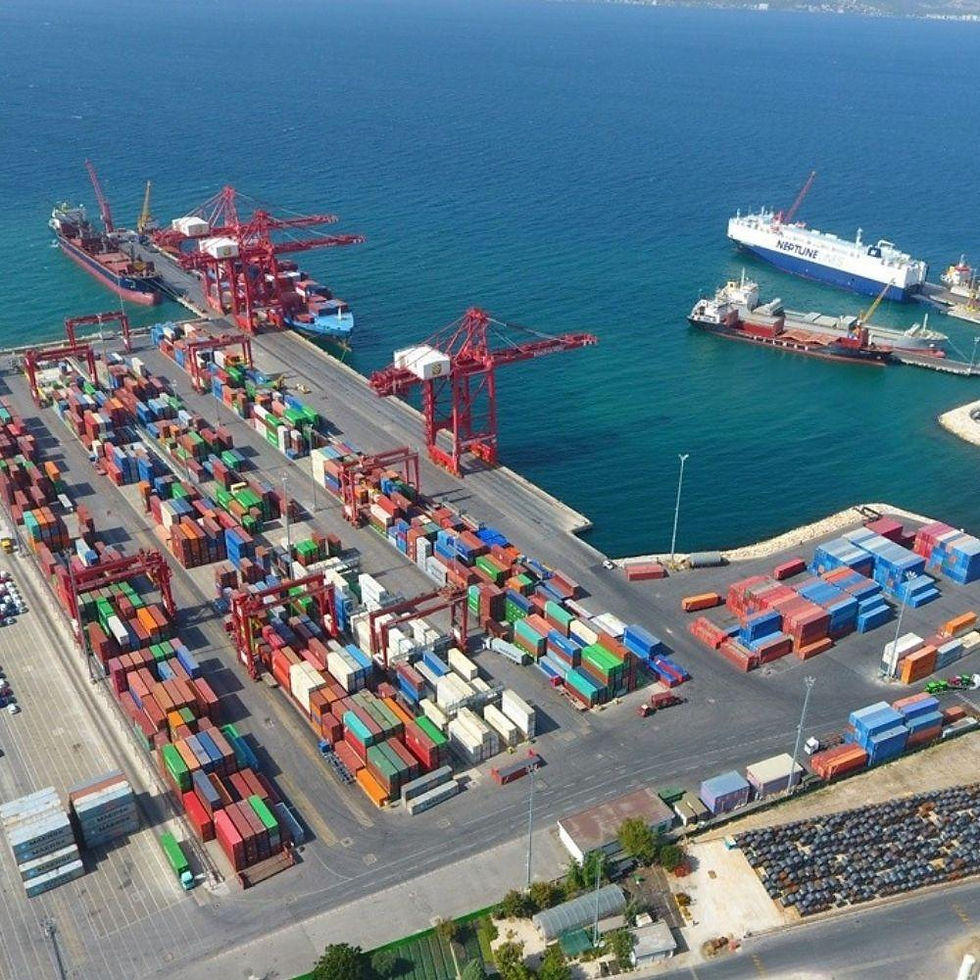
Because Bursa is not just a housing market. It is also one of Turkey's most important production, export, and industrial centers.
So, what might change in Bursa's real estate market if foreign capital starts returning to Turkey more strongly?
Let's examine this based on existing data, without engaging in a guessing contest.
Is Foreign Money Really Coming to Turkey?
We need to start with the most fundamental question.
When we say "foreign capital is coming," we are actually talking about different types of money movements.
A foreign fund buying shares from the Istanbul Stock Exchange is one thing, a company making a direct investment by building a factory in Turkey is another, and an international investor buying government bonds is yet another capital movement.
If we don't make this distinction, the figures can easily be misinterpreted.
In the first six months of 2026, international direct investment into Turkey amounted to approximately $4.2 billion. This figure is about 31 percent lower than the same period last year. However, it is seen that the decline in investment capital remained at only 6 percent, and high-volume investment liquidations were effective in a significant part of the total decrease.
Therefore, this data is neither sufficient to say:
“Foreign investors are leaving Turkey,”
nor is it sufficient to say,
“A large influx of foreign capital has begun into Turkey.”
However, the picture is somewhat different in portfolio investments.
As of August 14, 2026, the total purchases of Turkish securities by non-residents since the beginning of the year have reached approximately $7.7 billion. This includes equities, government domestic debt securities, and private sector bonds. At the same date, the share of foreign investors in the Istanbul Stock Exchange was approximately 32.6%. However, at the end of 2025, this rate was 36.3%.
When these two data points are read together, a more accurate conclusion emerges:
Foreign investors may be taking some positions again, but it is difficult to speak of a very strong and permanent foreign dominance compared to previous periods.
This distinction is important.
Because in large capital movements, whether the trend continues is more decisive than a change of a single week or a few months.
First Signal: Is Turkey's Strategic Importance Increasing?
The economy is not just about interest rates and inflation.
Political stability, security, energy access, production capacity, trade routes, and international relations are also taken into account when making large-scale investments.
The level Türkiye has reached in recent years, especially in the defense industry, is noteworthy in this respect.
When NATO Secretary General Mark Rutte visited ASELSAN in Ankara in April 2026, he stated that Turkey was experiencing an "industrial revolution" in its defense industry and emphasized Turkey's importance in terms of defense production within NATO.
In statements made around the July 2026 Ankara NATO Summit, defense production, joint investments, and industrial cooperation were also important agenda items.
It would not be correct to immediately conclude from this:
The defense industry has developed, therefore foreign money will flow into Turkey.
The economy does not work that linearly.
However, looking at it from a broader perspective, it can be said that Türkiye's production capacity and strategic importance are among the factors evaluated in international investment decisions.
Therefore, it's more accurate to see this not as a result, but as a supporting signal.
Second Signal: Turkey is Changing the Rules to Attract Capital
In my opinion, this is one of the most important developments of the recent period.
With Law No. 7582, adopted in May 2026, a 20-year income tax exemption was introduced for earnings and income obtained outside Turkey by individuals who become resident in Turkey by fulfilling certain conditions.
There is an important detail here.
The regulation exempts all rental, interest, or investment income earned in Turkey from tax for 20 years.
Why does Bursa hold a special place in this story?

It would be incomplete to analyze Bursa's real estate market solely through the question of "how many houses were sold?"
Because Bursa's economy is backed by a strong production infrastructure.
According to figures compiled by BTSO from TİM data, Bursa's exports in the first six months of 2026 reached approximately $10.18 billion, a 9.3% increase compared to the same period last year.
During the same period, automotive industry exports reached approximately $5 billion, with an annual increase of 16.4%. Exports of machinery and parts also reached approximately $647 million.
The significance of these figures for real estate is this:
If a city continues to produce and export, the demand for real estate is not solely driven by individual housing needs.
It also creates a need for:
factories,
warehouses,
logistics areas,
offices,
commercial properties,
employee housing,
and new development areas.
Therefore, if foreign capital returns to Turkey strongly, we don't necessarily have to see its first effect in Bursa as a classic "everywhere increase in housing prices."
In fact, a different scenario might be more likely.
The First Movement May Be Seen in Industrial and Commercial Real Estate Before Housing
When an international company decides to invest in Turkey, its first need is usually not housing.
First, a production facility is needed.
Then, the need for warehousing and logistics arises.
Suppliers arrive.
Employment increases.
Trade volume grows.
And after all this, the demand for housing and services in the region may strengthen.
Therefore, in production-oriented cities like Bursa, the impact of a potential influx of foreign capital on real estate could follow this sequence:
Production → industrial areas → logistics/warehousing → commercial real estate → employment → housing demand.
Of course, there is no guarantee that this will happen exactly like this.
But it is a possibility worth considering from an economic mechanism perspective.
So, Is the Real Estate Market Already Active?
Here, the current data requires us to be a little more cautious.
According to the Central Bank of Turkey's (TCMB) July 2026 Housing Price Index, housing prices across Turkey increased nominally by 25 percent compared to the same month of the previous year.
At first glance, this is a significant increase.
However, when the effect of inflation is removed, housing prices decreased by 5.1 percent in real terms during the same period.
A similar situation exists in commercial real estate.
In the second quarter of 2026, although the Commercial Real Estate Price Index increased nominally by 29.4 percent year-on-year, it decreased by 2.2 percent in real terms.
This tells us something important:
Real estate prices are rising in Turkish Lira terms, but they are not yet experiencing a strong real appreciation above inflation.
Therefore, for today:
"A new major boom in real estate has begun."
It would be premature to say this based on the data.
But conversely:
"Real estate is no longer an investment."
It would be equally superficial to conclude this.
The real question is in which direction economic conditions will change from now on.
The Key: Inflation and Financing
One of the most powerful factors that could change the real estate market is the cost of credit.
As of July 2026, the CBRT's policy interest rate is at 37 percent. According to Turkish Statistical Institute (TÜİK) data, the annual consumer inflation rate for July was 31.75 percent.
In its Inflation Report published in August, the CBRT announced its year-end inflation forecast for 2026 as 28 percent and for 2027 as 15 percent.
If the decline in inflation becomes permanent and, consequently, financing costs begin to fall over time, the mathematics of the real estate market could change.
Because the budget a person can access with credit to buy the same house could increase.
From an investor's perspective, the attractiveness of real estate compared to alternative investment instruments could also change again.
But the important word here is:
"If."
Because this depends on inflation falling permanently, monetary policy allowing this, and economic expectations improving.
So, What Should We Really Be Following?
To understand whether a large influx of foreign capital into Türkiye has begun, it's not enough to look at a single news item or indicator.
If I were you, I would follow five data points together in the coming period.
1. Foreign Investor Share and Net Securities Purchases
The trend that continues over months, not just a few days' increase in the foreign ownership ratio on the Istanbul Stock Exchange, is important.
Similarly, one should look at whether foreign investors' holdings of stocks and government bonds are growing consistently, as shown in the Central Bank of Turkey's (TCMB) data. The TCMB regularly publishes this data as part of its Securities Statistics.
2. Foreign Direct Investment
In my opinion, this is the most critical indicator.
Because the economic impact of foreign investors who build factories, acquire companies, or make long-term production investments is not the same as that of short-term portfolio investors.
The $4.2 billion FDI figure for the first half of 2026 does not yet indicate a strong acceleration.
An increase in this figure over the next few quarters would be a more meaningful confirmation.
3. Inflation and Interest Rates
Perhaps the two most important factors in real estate.
Three Possible Scenarios for Bursa
Instead of making definitive predictions about the future based on current data, I find it more accurate to consider three different possibilities.
Scenario 1: Gradual Normalization
Inflation gradually declines.
Interest rates fall in a controlled manner.
Foreign investors increase their positions in Türkiye.
Bursa maintains its export and industrial strength.
In this scenario, rather than a widespread price surge in real estate, we may see selective appreciation in high-quality properties close to economic activity.
Industrial land, warehouses, factories, and some commercial real estate may move before housing in this process.
Scenario 2: Capital Inflow Accelerates
The picture may change if inflation declines faster than expected, financing conditions improve, and international capital begins to return to Türkiye more strongly.
In this case, a broader-based movement in housing demand may occur after industrial and commercial real estate.
Regions where employment, transportation investments, and production are growing may come to the forefront.
Scenario 3: Inflation and Uncertainty Continue
If inflation remains high, financing remains expensive, or global geopolitical risks increase, the capital flow we are discussing today may not occur.
In this case, even if real estate prices continue to rise in Turkish Lira terms, real returns may remain weak.
Today's data actually reminds us that this third possibility is also on the table.

Conclusion: Is the Stage Being Set?
There are several seemingly independent developments in Turkey recently:
The international position of the defense industry is strengthening.
Turkey is implementing new regulations to attract international capital.
The Middle Corridor and new trade routes are gaining more importance.
Foreign investors are re-establishing positions in Turkish securities.
Bursa's export and production capacity remains strong.
Putting all these together, it is possible to say that a noteworthy investment scenario is emerging for the coming years.
However, there are still missing pieces as of today.
Foreign direct investment has not yet accelerated strongly.
The share of foreign investors in the Istanbul Stock Exchange is below previous years' levels.
Financing costs are high.
Residential and commercial real estate prices, when adjusted for inflation, are still declining in real terms.
Therefore, our conclusion is:
“Big money is coming, buy real estate.”
not.
A more measured statement could be made:
Certain economic and strategic conditions are emerging that could allow Türkiye to once again strongly enter the radar of international capital. However, whether this will translate into a real investment cycle will be shown by capital inflows, inflation, interest rates, and production data in the coming period.
This is the key area to watch for Bursa.
Because if such a change occurs, its impact will not be the same in every neighborhood and every property.
Areas dependent on production, logistics, employment, and transportation infrastructure, as well as correctly priced, high-quality properties, may stand out from the rest.
Perhaps the question we should be asking today isn't "which property will definitely rise in value?"
A more accurate question might be:
When economic conditions begin to change, which properties in Bursa are truly capable of benefiting from this change?
This is the main issue to follow in the coming period.
This article is not investment advice. Its purpose is to evaluate possible scenarios that could affect the real estate market based on publicly available economic data and current developments.
Ramazan Kocatürk Broker / 4K Real Estate


Comments